Turf ManagementTurfSigma Foundation Programs
Homeowner

Science & mode of action

The research behind the Sigma Foundation Program: the evidence, the organisms, soil carbon, how the program is built, black layer and thatch, and practical problem guides.

Knowledge base

Soil biology, mode of action and problem guides

What the published research shows, what each organism in a biological program does, how biochar holds water and nutrients in the root zone, and practical guides to common turf problems. Agronomy first; product options where they apply.

Follow the science · the evidence

Biocontrol · Trichoderma harzianum
71%

Reduction in initial dollar spot severity on creeping bentgrass, with disease onset delayed by up to 30 days, in four years of field trials. Trichoderma populations stayed at or above 10⁵ CFU/g through winter.

Lo, Nelson & Harman (1996), Plant Disease 80:736 ↗
Black layer · hydrogen sulfide
7 days

Time for 1,000 ppm hydrogen sulfide to kill creeping bentgrass. Sulfur combined with high organic matter produced far more sulfide than sulfur alone, so keeping the root zone aerobic is the core of prevention.

Berndt (2016), Golf Course Management ↗

Root-zone organisms

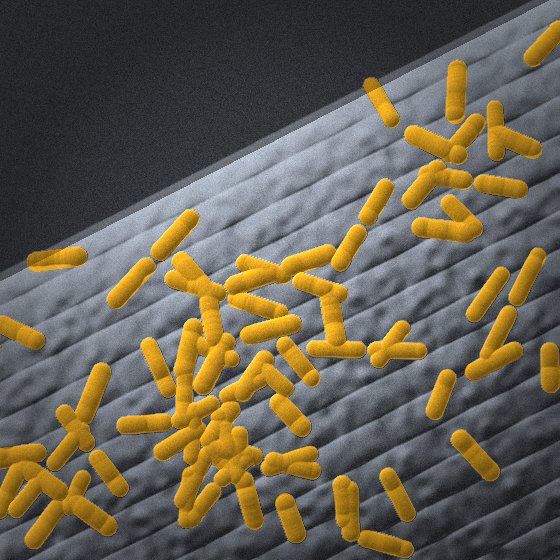
Illustration of Bacillus on a root surface
Bacteria

Bacillus spp.

Colonize the rhizoplane and drive nutrient cycling, making bound nutrients plant-available. Several species produce compounds active against soil-borne pathogens.

  • B. subtilis: stress tolerance, nutrient uptake, root protection
  • B. amyloliquefaciens: soil-borne pathogens, parasitic nematodes
  • Brevibacillus laterosporus: Phytophthora suppression
  • B. licheniformis: germination, root branching
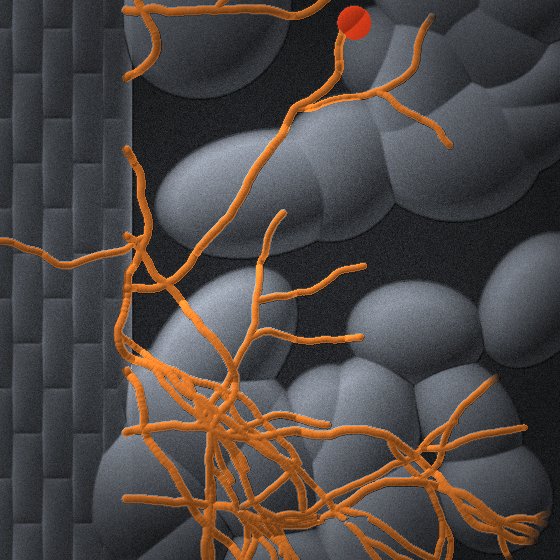
Illustration of mycorrhizal hyphae in sand
Fungi · endomycorrhizae

Glomus spp.

Arbuscular mycorrhizal fungi extend hyphae beyond the root depletion zone, increasing uptake of water and immobile nutrients, especially P, Cu, Mn and Zn.

  • G. intraradices: phosphorus and water uptake
  • G. etunicatum: drought and salinity tolerance
  • G. aggregatum: heavy-metal tolerance
  • G. mosseae: protection from nematodes and fungal infection
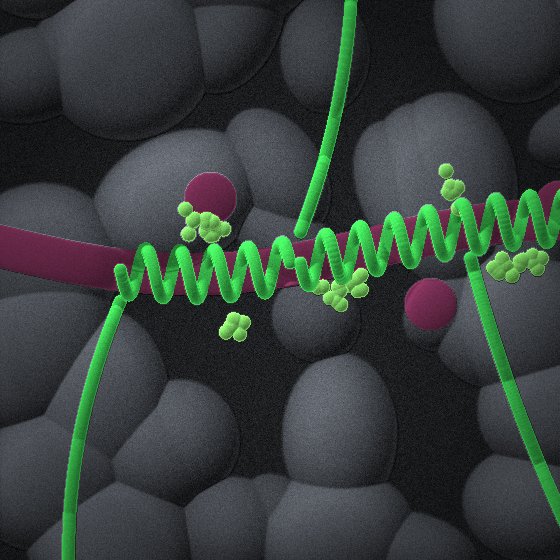
Illustration of Trichoderma coiling a pathogen hypha
Fungi · biocontrol

Trichoderma spp.

Mycoparasites that coil around and degrade pathogenic fungi, compete for root-zone space and nutrients, and can stimulate plant defenses.

  • T. viride: biomass accumulation, Pythium root rot
  • T. harzianum: plant growth, Fusarium and Botrytis

Micrographs are illustrations. Species and counts per Sigma Bio product labels.

Strain of the week · the 10 strains in Sigma Bio

One strain featured each week, with a published study behind it. Tap any strain to read it now. The studies were run on crops and seedlings, so the test conditions are listed with each result.

Soil carbon · the Sigma Biochar Platform

The Sigma Biochar Platform is built from premium biochar feedstocks, including virgin pecan shell biochar, and engineered in four forms. Particle size decides where each one works best: fine particles carry the most surface area per pound and move easily through a spray tank or a thin layer of topdressing, while granules stay where they are placed in the profile. All four are compatible with humic acids, biologicals and seaweed extracts.

ProductFormWhere it fits
Sigma Biochar EZ MixMedium granularConstruction, renovation and grow-in on bare soil; root-zone mixes; placed below the surface with DryJect or WetJect; fertilizer blending.
Sigma Biochar Powder PlusFine powderBlended into topdressing sand so every pass adds carbon habitat; greenhouse starter trays and plugs; liquid and specialty formulations.
Sigma Biochar 5MSprayable liquid, 5-micronExisting spray programs where moderate rates are needed: tank-mixed with Sigma Bio, Molasses and Seaweed on the 21-day liquid cycle; injection and fertigation.
Sigma Biochar DispersionHigh-solids liquidGrowing media, soil and compost manufacturing.

Cleaner water below the root zone

Water leaving the root zone carries whatever the soil could not hold. Biochar's porous structure and charged surfaces keep more water and nutrients in the zone where roots and microbes can use them, so on average less nitrate moves down toward groundwater.

Sand root zone · water held
+73%

More water held at field capacity in sand amended with biochar versus straight sand, and nitrate in the leachate fell from 5 ppm to zero as biochar content increased.

Brockhoff (2010), Iowa State University ↗
Rate matters · bentgrass
10% max

Above about 10% biochar by volume in a sand green, bentgrass rooting depth fell by as much as 46%. Biochar works as a light amendment and a spray, not a bulk replacement for sand.

Brockhoff (2010), Iowa State University ↗

Results vary with soil, biochar source and rate. A USDA-ARS field study on a sandy loam in California found no drop in nitrate leaching, which is why Sigma recommends rates from soil tests and pairs biochar with biology and sound irrigation rather than relying on it alone. Gao, USDA-ARS (CDFA FREP report) ↗

Program structure

How the Sigma Foundation Program is built

A biological fertility program in two layers, designed to run alongside an existing fertilizer and protection program rather than replace it.

Granular base

Slow-release organic granular (8–12 week feed) carrying humic acids and the Bacillus, endomycorrhizae and Trichoderma consortium. Applied early season, every 6–8 weeks, and at 2X at aerification.

Liquid cycle

Inoculum (Sigma Bio), microbial food sources (Molasses, Microalgae, Seaweed), carbon habitat (Biochar 5M) and potassium (K-Ferm). Tank-mixed with existing sprays on 21-day intervals.

Two ways to start

Core Program: Sigma 4-4-4 Bio with the liquid cycle. Tailored Options: a different granular base chosen for site conditions such as phosphorus limits, Poa pressure or fairway acreage. Both are listed in the product library.

Black layer and mode of action in the root zone

Two putting-green soil cores: A, an anaerobic profile with thick thatch and a black layer; B, an aerobic, biologically active profile with deep roots A Anaerobic, thatch-accumulating B Aerobic, biologically active 02468101214 cm Canopy Thatch1.3 cm, fibrous organic layer Matthatch intermixed with sand Black layeranaerobic band, 3–6 cmFe / Mn sulfides, H₂S Sand root zonefew roots below theanaerobic zone Canopy Thatch0.5 cm Mat Aerobic sand root zoneno sulfide layer; roots,hyphae and microbes activethroughout the profile Rooting depth12+ cm a b c d e f g rendered illustration · 1:1 scale, 50 px = 1 cm

← swipe to see both cores →

Where the program acts (markers on core B)
  1. Mineralization. Microbes break down organic N and P in the Sigma 4-4-4 Bio granule into plant-available ammonium, nitrate and phosphate over 8–12 weeks.
  2. Rhizoplane colonization. Bacillus colonize the root surface, cycle nutrients and compete with pathogens for space.
  3. Hyphal extension. Endomycorrhizal hyphae reach past the root depletion zone and return P, Zn, Cu, Mn and water.
  4. Biocontrol. Trichoderma parasitize pathogenic fungal hyphae and persist in the root zone as spores.
  5. Cation retention. Humic acids and 5-micron biochar add exchange sites that hold K⁺, Ca²⁺ and Mg²⁺ in low-CEC sand.
  6. Carbon supply. Molasses, microalgae and seaweed provide short-, mid- and long-term carbon to keep microbial populations active.
  7. Thatch decomposition. Cellulase-producing Trichoderma and Bacillus degrade cellulose and hemicellulose in the thatch and mat, slowing organic matter accumulation.
Black layer: cause and management

What it is. A dark band, usually 2–8 cm deep, that forms when part of the root zone goes anaerobic. Sulfate-reducing bacteria produce hydrogen sulfide, which reacts with iron and manganese to form black metal sulfides. It smells of rotten egg and is toxic to roots.

Contributing factors. Excess organic matter and mat, layering from topdressing or sod, compaction, perched water, overwatering, and high sulfur inputs.

Program role. Aerobic microbial activity and thatch decomposition (g) limit the organic matter that drives oxygen demand. Deeper roots (b, c) also improve water movement through the profile.

Biology complements cultural control; it does not replace it. Core or solid-tine aerification, venting, sand topdressing, irrigation management and reducing sulfur sources remain the primary corrections.

Figure 1. Putting-green soil cores, USGA-type sand root zone, rendered at 1:1 scale. A: thick thatch and mat over an anaerobic black layer that limits rooting. B: thin thatch, an aerobic profile and roots extending past 12 cm. Rendered illustration based on typical field cores; not a photograph of a specific site.

Watch

The program at work in the root zone

A 68-second animation, with narration, of how the granular base and the liquid cycle build the aerobic, biologically active profile shown in core B.

Glossary

CFU
Colony-forming units. A count of viable bacterial or fungal cells able to grow into colonies.
Propagule
Any mycorrhizal structure that can start a new colonization: spores, hyphal fragments or colonized root pieces.
SGN
Size guide number. Median particle diameter in mm × 100. SGN 110 suits greens and tees; SGN 250 suits fairways and roughs.
WSN / WIN
Water-soluble and water-insoluble nitrogen. WIN releases slowly through microbial mineralization.
CEC
Cation exchange capacity. The soil's ability to hold K⁺, Ca²⁺, Mg²⁺ and NH₄⁺. Low in sand-based root zones.
Rhizosphere
The narrow zone of soil influenced by root exudates, where microbial activity is highest.
Humic acids
Stable organic fractions, here derived from leonardite, that increase CEC and nutrient retention.
Biostimulant
A material that improves nutrient efficiency, stress tolerance or quality traits, independent of its nutrient content.
Organic program
Sigma Bio granulars, liquids and soil carbon only. Organic nitrogen, humate and beneficial microbes go out with every application.
Bridge program
The bridge from conventional to organic. Sigma’s organic base and soil biology work alongside conventional fertilizer, so you keep the analysis, results and price point you count on while building healthier soil: the best of both worlds. Bridge grades (12-2-6, 15-5-10, 16-2-3 Bio Bridge) do it in one granule, or Sigma products are blended or tank-mixed into the program you already run.
Conventional program
Straight synthetic fertilizer at typical rates. We show it as the reference point, so every Organic and Bridge program can be compared against it. The baseline. Add Sigma biology to it and it becomes a Bridge program.

Problem guides

Guide · cultural practice

Aerification recovery

Core aerification relieves compaction, removes organic matter and opens the profile to air and water. Recovery time depends on growth rate, so most of the work is timing and supporting growth before and after the event.

Before

  • Schedule during active growth: late spring to early summer for warm-season turf, late summer to early fall for cool-season turf.
  • Make sure the turf is not under drought or heat stress going in.
  • Have topdressing sand on site that matches your root-zone particle size.

Day of

  • Fill holes completely with topdressing; partly filled holes slow healing and leave an uneven surface.
  • Granular fertility can go down with the sand so it settles into the holes.
  • Irrigate lightly to settle sand and limit desiccation of exposed roots.

After

  • Keep a steady, moderate supply of nitrogen and potassium to drive lateral growth.
  • Raise mowing height slightly for the first week and hold off on rolling until the surface firms.
  • Watch for desiccation on high spots and slopes.
Where Sigma products fit
  • Sigma Bio granulars at 2X the normal rate (14 lb / 1,000 ft²) with topdressing, per the golf application guide.
  • Sigma 4-4-4 Bio for extra biology and humic acids when recovery is the priority.
  • Sigma Seaweed and Sigma Bio in the next spray to support recovery from stress.
Guides in development
Summer declineLow light and shadeSand root-zone establishmentPoa annua seedhead managementSalinity and poor water quality

Tell us which guide you need next using the agronomy support form.

Seasonal outlook · Southeast

A strong El Niño is expected to bring above-average rainfall, more cloud cover and cooler periods across the Southeast this winter. Main risks: root-zone saturation and low oxygen, carbohydrate depletion under low light (notably on ultradwarf bermudagrass greens), large patch, spring dead spot, Pythium and dollar spot, nutrient leaching, and traffic injury on wet soils.

Sep – Oct
Fall preparation
  • Improve structure and drainage
  • Build root mass and carbohydrate reserves
  • Limit excess nitrogen
Nov – Feb
Winter protection
  • Low-growth, high-benefit nutrition
  • Manage traffic and mechanical stress
  • Keep biological inputs consistent
Mar – Apr
Spring recovery
  • Reactivate soil biology
  • Restore carbohydrate reserves
  • Monitor for disease at green-up

Full El Niño guide (PDF)