Farming & Crop NutritionFarmingDriven by nature. Backed by science.
Homeowner

The science behind Sigma

How organic nutrients, beneficial microbes and soil carbon work together in the root zone, what the published research says, and what to look for in any biological product.

How it works

What happens in the root zone

Every Sigma product combines organic nutrients, beneficial microbes and soil carbon. The photos below are from crops in Sigma programs; the table explains each process.

Figure 1 · The root zone in the field

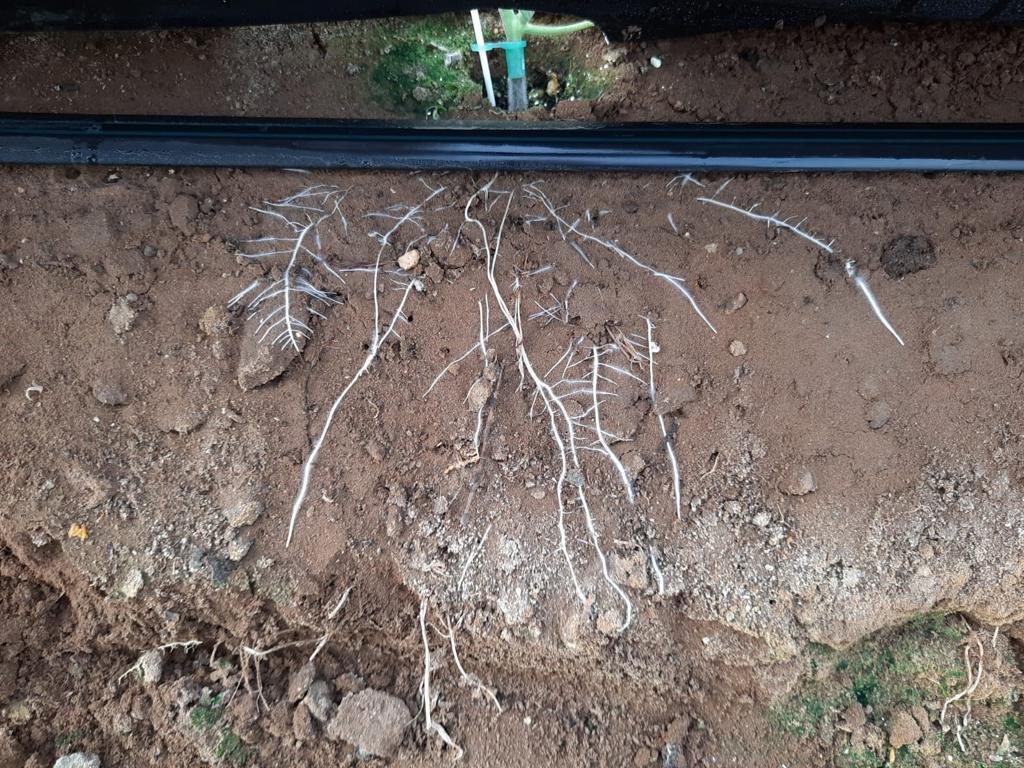
Soil profile cut beside a drip line, with fine roots spreading through the wetted zone
ASoil profile beside a drip line. Fine roots spread through the wetted zone, where water carries released nutrients to them.
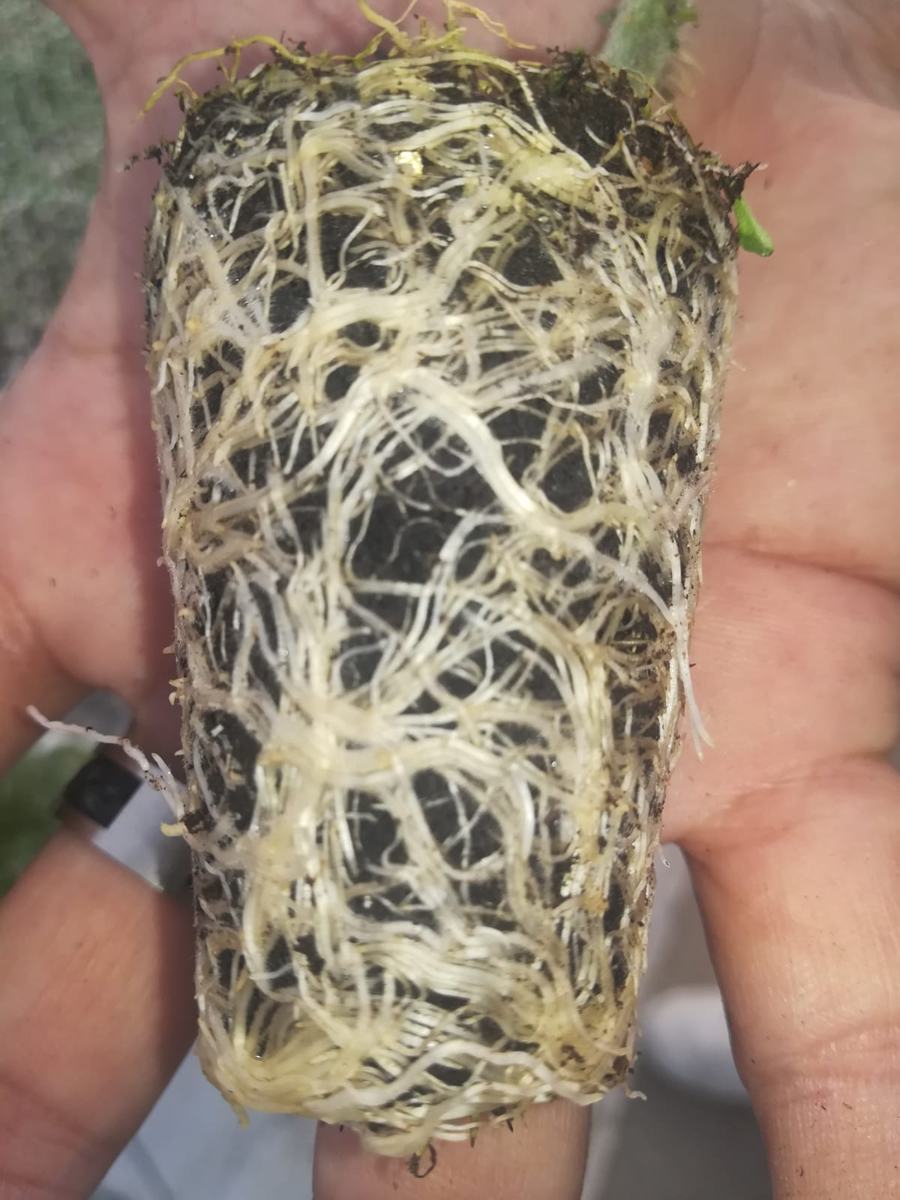
Dense white feeder roots on a transplant root ball
BDense, white feeder roots: the surface Bacillus colonize and mycorrhizae enter.
White fungal mycelium spreading over Sigma granules on an orchard floor
CFungal mycelium spreading over Sigma granules on an orchard floor.
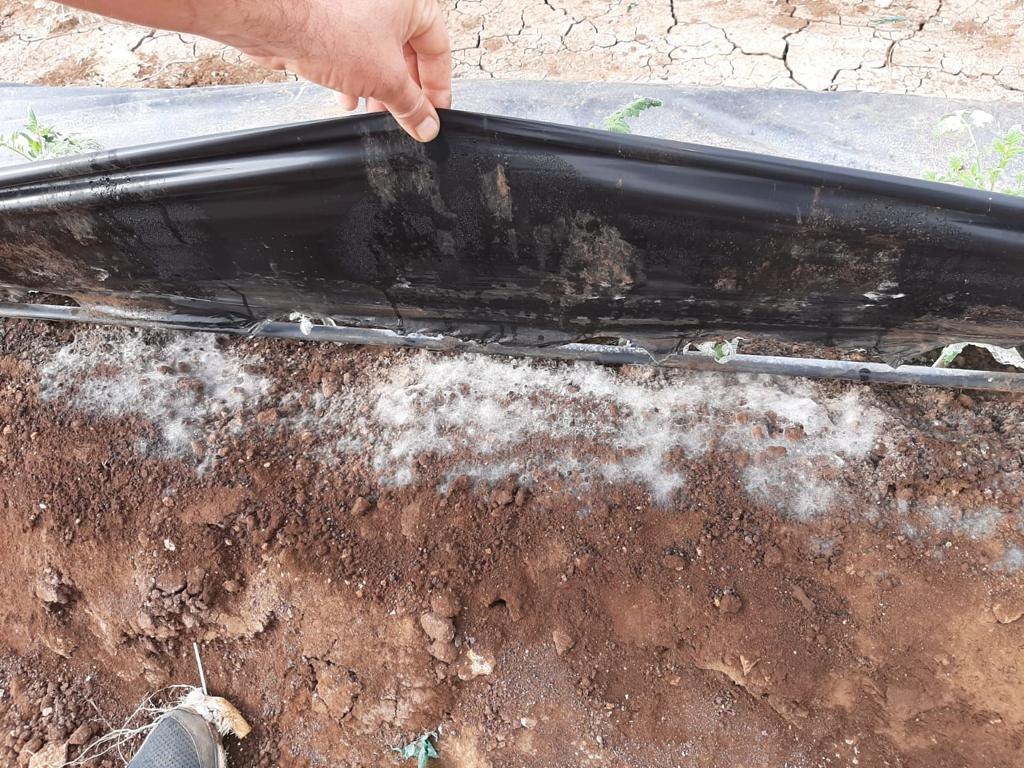
White fungal growth on the soil surface under lifted plastic mulch
DFungal growth under plastic mulch, breaking down organic matter at the soil surface.
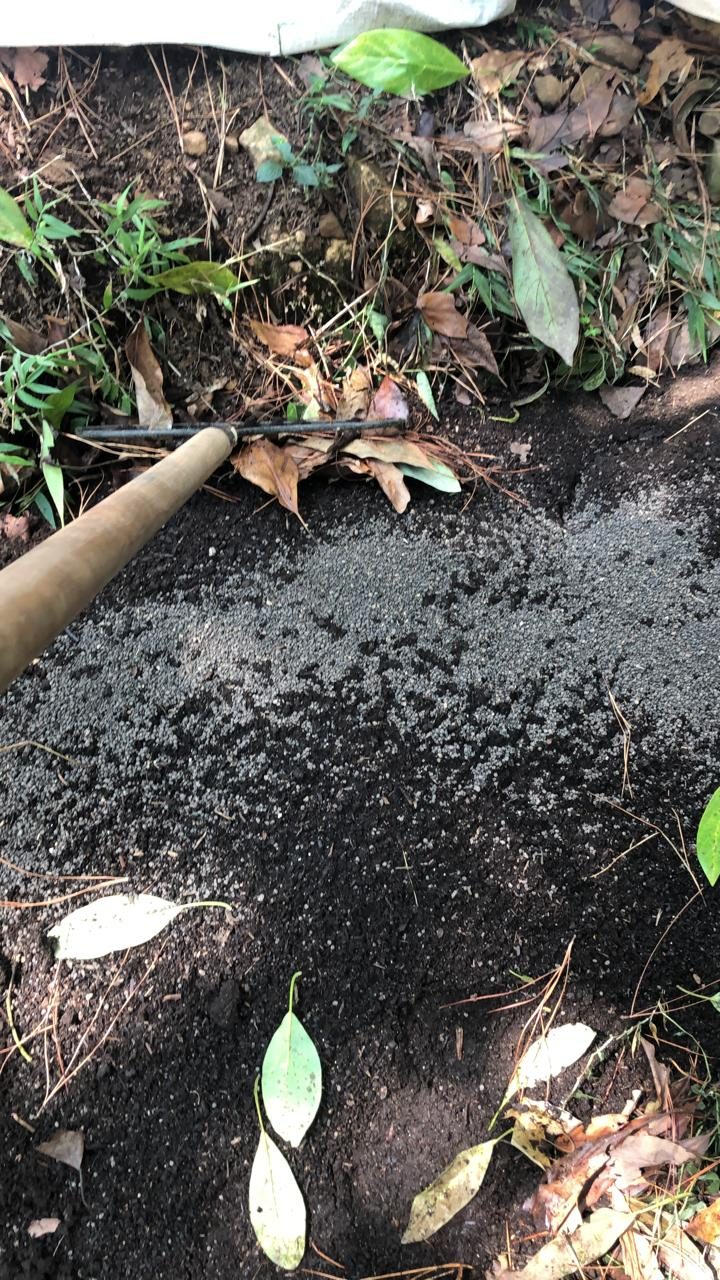
Sigma granules spread on the soil under a tree canopy
ESigma granules under the canopy: the organic nitrogen, phosphorus and carbon source.

Six processes, start to finish

ProcessTimingSigma sourcePhoto
1Organic nutrients are released
Soil microbes mineralize the organic nitrogen and phosphorus in each granule into ammonium, nitrate and phosphate.
8 to 12 weeksOrganic N-P-K in every granuleE
2Bacillus colonize the root
Bacteria form a biofilm on the root surface, cycle nutrients from organic matter and help free phosphorus bound to calcium, iron and aluminum.
About a day to form a biofilmBacillus, 2.8 to 4.2 million CFU / lbB
3Mycorrhizae extend the root
Fungal hyphae grow from inside the root past its depletion zone and return phosphorus, zinc, copper and water.
Weeks to colonizeGlomus species, 6.1 to 9.4 propagules / lbA, B
4Carbon holds nutrients
Humic carbon and biochar add exchange sites (CEC) that hold K⁺, Ca²⁺, Mg²⁺ and NH₄⁺ where roots can reach them.
Season-longHumic acids 3%, humate 5 to 10%; Biochar 5MA
5Trichoderma recycle residue
Fungi release cellulase enzymes that break down crop residue and leaf litter, returning its nutrients to the soil.
WeeksTrichoderma, 480,000 to 716,000 CFU / lbC, D
6Liquid carbon feeds the biology
Molasses, microalgae and seaweed are microbial food, so populations build faster after an application.
Days to season-longSigma Molasses, Microalgae, Seaweed

Timing depends on soil temperature, moisture and organic matter. Counts from Sigma technical data sheets.

The biology

Three groups of organisms, in every product

Bacillus bacteria, mycorrhizal fungi and Trichoderma ride in every Sigma granular and in Sigma Bio. Each does a different job.

Bacteria

Bacillus

Rod-shaped soil bacteria and among the most widely studied plant-growth-promoting rhizobacteria.

  • Colonize the root surface and the soil right around it
  • Help release phosphorus bound to calcium, iron and aluminum
  • Form a biofilm on the root within about a day
  • Cycle nutrients out of organic matter
  • Form endospores, so they survive storage and dry soil until conditions are right
In Sigma: B. subtilis · B. amyloliquefaciens · B. licheniformis · Brevibacillus laterosporus
Fungi

Mycorrhizal fungi

Arbuscular mycorrhizal fungi live inside root cells and trade nutrients for sugars from the plant: a partnership found in most crops.

  • Fungal threads (hyphae) extend far past the root depletion zone
  • Take up phosphorus, zinc and copper the root cannot reach
  • Move water to the plant in dry soil
  • Fungal threads help bind soil into stable crumbs
In Sigma: Glomus intraradices · G. etunicatum · G. aggregatum · G. mosseae
Fungi

Trichoderma

Fast-growing soil fungi that work through crop residue and colonize root surfaces. The white threads in the photo spread over Sigma granules on an orchard floor.

  • Release cellulase enzymes that break down crop residue and leaf litter
  • Return the nutrients in that residue to the soil
  • Colonize root surfaces and support root growth
  • Some strains help free phosphorus and zinc
In Sigma: Trichoderma harzianum · T. viride

Guaranteed counts

ProductBeneficial bacteriaMycorrhizaeTrichodermaHumic acids
Sigma 4-4-4, 5-3-2, 7-2-1, 8-5-1 Bio2,800,000 CFU / lb6.1 propagules / lb480,000 CFU / lb3% humic acids
Sigma 6-2-6 Bio2,800,000 CFU / lb6.1 propagules / lb480,000 CFU / lb5% humate
Sigma 2-4-2 Bio 2X4,200,000 CFU / lb9.4 propagules / lb716,000 CFU / lb10% humate
Sigma Bio (liquid)17.0 billion CFU / gal37,800 propagules / gal2.8 billion CFU / gal

From Sigma technical data sheets. CFU: colony-forming units. Propagules: spores and other structures that can start a mycorrhizal colonization.

Good to know: cole crops (cabbage, broccoli, cauliflower, canola) and the beet and spinach family do not form mycorrhizal partnerships. Bacillus, Trichoderma, humic carbon and organic nitrogen still work for them, and mycorrhizae carry over to the next crop in the rotation.
Why three groups, not one? Each does a different job, and combinations add complementary functions. In a meta-analysis of mycorrhizal studies, mixed-species inoculum produced stronger plant responses than single species (Hoeksema et al. 2010), and co-inoculating bacteria with mycorrhizal fungi usually adds up rather than competes (Berrios et al. 2024).

Strain of the week

One of the 10 strains in Sigma Bio featured each week, with a published study behind it. Tap any strain to read it now; test conditions are listed with each result.

Carbon

Carbon is the food and the home

Microbes need carbon to eat and a place to live. Humic carbon, organic matter and biochar provide both, and they hold nutrients in the root zone.

Humic and fulvic acids

Stable carbon fractions from humate (leonardite), built into every Sigma granular.

  • Add negatively charged exchange sites (CEC) that hold K⁺, Ca²⁺, Mg²⁺ and NH₄⁺
  • Bind iron, zinc and manganese in forms roots can still take up
  • Stimulate root growth
  • Buffer the soil around the granule

Research: across 81 studies, humic substances raised shoot and root growth about 20% on average. The response depends on source and rate; leonardite humics sat at the low end, around 12% for shoots (Rose et al. 2014).

Soil organic matter

Every organic input, from the granule to crop residue, builds it over time.

  • Holds water and releases it to roots between rains
  • Supplies nitrogen, phosphorus and sulfur as it breaks down
  • Glues soil into crumbs that drain and breathe
  • Feeds the whole soil food web

Research: humus holds 100 to 300 meq of exchangeable nutrients per 100 g, against under 2 for sand (Soil Quality fact sheet, GRDC). Each 1% of organic matter adds roughly 2,000 to 3,000 gallons of plant-available water per acre in the topsoil, most in sandy soils (Minasny & McBratney 2018; Libohova et al. 2017).

Biochar

Sigma Biochar 5M: softwood biochar milled to 5 microns, with 342 m² of surface per gram, that stays in suspension for drip and spray.

  • Porous structure where microbes settle and survive
  • Adds exchange sites and water holding
  • Very stable: it stays in the soil for years

Research: field trials apply solid biochar by the ton; with fertilizer it raised yields 15% on average, mostly on acid, low-fertility soils (Ye et al. 2020). Sigma Biochar 5M goes on at liquid rates as a home for the biology, not as a bulk soil amendment.

How much is in Sigma

Humic acids, guaranteed on every data sheet:

  • 3% in Sigma 4-4-4, 6-2-6, 7-2-1 and 8-5-1 Bio
  • 6% (2X) in Sigma 5-3-2 Bio and 2-4-2 Bio 2X
  • Organic matter from poultry manure, feather meal, bone meal and other organic inputs in every granule

The Sigma Biochar Platform

Built from premium biochar feedstocks, including virgin pecan shell biochar, and engineered in four forms. Particle size decides where each one works best: fine particles move through a drip line, spray tank or seed-starting mix, while granules stay where they are placed in the soil.

ProductFormWhere it fits
Sigma Biochar EZ MixMedium granularBare soil and bed preparation, soil incorporation, and fertilizer blending.
Sigma Biochar Powder PlusFine powderGreenhouse and nursery: small starter trays, plugs and transplants; liquid and specialty formulations.
Sigma Biochar 5MSprayable liquid, 5-micronExisting programs where moderate rates are needed: drip, fertigation, injection and foliar or soil sprays with Sigma Bio.
Sigma Biochar DispersionHigh-solids liquidGrowing media, soil and compost manufacturing.
−13%

Less nitrate reaching groundwater. Across published experiments, biochar cut nitrate leaching 13% on average, and by more than 26% in experiments longer than 30 days. Borchard et al. 2019 ↗

Read it straight: results vary with soil, biochar source and rate. A USDA-ARS field study on a California sandy loam found no drop in nitrate leaching, so Sigma sets rates from soil tests and pairs biochar with biology and good irrigation rather than relying on it alone. Gao, USDA-ARS ↗

Nitrogen release

Organic nitrogen, released by biology

Most of the nitrogen in a Sigma granule is water-insoluble. Soil microbes turn it into plant-available ammonium and nitrate over 8 to 12 weeks.

Quick and slow nitrogen in each grade

Share of total nitrogen, from the guaranteed analysis.

2-4-2 Bio20% · 80%
4-4-4 Bio20% · 80%
5-3-2 Bio32% · 68%
6-2-6 Bio15% · 85%
7-2-1 Bio27% · 73%
8-5-1 Bio15% · 85%
Water-soluble: available nowWater-insoluble: released by microbes

What that means in the field

  • A small soluble share gets the crop going; the rest follows as the crop grows
  • Release speeds up in warm, moist soil, when crops grow fastest, and slows in cold soil
  • Less nitrate sits in the soil at any one time, so less is exposed to leaching after heavy rain
  • Plan earlier applications in cool spring soils, or use a Bridge program when the crop needs fast nitrogen

Research: university release data: feather meal makes about 60% of its nitrogen available in 4 weeks and 75% in 10; poultry litter about 27% and 42% (Oregon State Extension EM 9235). Cool soil slows the first week most; by week 8 the gap is small (Hartz & Johnstone 2006).

Liquids

Feeding the biology through the season

The liquid program pairs the inoculum with food sources that last from days to the whole season, applied through drip, fertigation or the sprayer.

Short term

Sigma Molasses

High-brix cane molasses: simple sugars microbes use within days. The fastest start after planting.

Mid range

Sigma Microalgae

Pasteurized whole-cell algae: proteins, lipids and carbohydrates that keep populations growing.

Long term

Sigma Seaweed

Ascophyllum nodosum extract: complex carbohydrates such as alginate, plus natural plant biostimulant compounds.

Habitat

Sigma Biochar 5M

5-micron softwood biochar, 342 m² of surface per gram: a porous home where microbes settle and survive.

Inoculum

Sigma Bio

The three groups of organisms in a dormant suspension that activates on contact with organic matter, in about 3 days.

Research: Ascophyllum nodosum extracts are among the best-documented biostimulants, with reviews citing better drought, salt and heat tolerance and nutrient uptake (Shukla et al. 2019). Microalgae research is newer and promising (Chiaiese et al. 2018). Simple sugars such as molasses feed microbes fast and can briefly tie up soil nitrogen while populations grow.

Tank order: Sigma Bio, Molasses, Microalgae, Biochar 5M, Seaweed, then K-Ferm, then the rest of the spray. Jar test new partners.

Quality

What separates a quality biological fertilizer

Not every product that says biological delivers live organisms to the field. These are the things that matter, and how Sigma handles each one.

In every Sigma product

  • GranCORE granule. Powder granulated into a true round granule with a molasses and lignin sulfonate binder: consistent bulk density and an even spread.
  • Every prill inoculated. Each granule carries Sigma Bio, not just a coating on part of the batch.
  • Counts on the label. Bacteria, mycorrhizae and Trichoderma are guaranteed per pound on every data sheet, alongside the N-P-K.
  • Humic acids built in. 3% in standard grades and 6% in Sigma 5-3-2 Bio and 2-4-2 Bio 2X.
  • Consistent sizing. Large SGN 250 and fine SGN 110, so the product spreads and blends evenly.
  • OMRI-listed inputs. Granular grades and liquids carry OMRI listings for certified organic production; certificates are linked from every product.
  • Documented. A technical data sheet and a 16-section SDS for every product; registered state by state.

Questions to ask any supplier

  • Are the organisms guaranteed on the label? Look for counts per pound or per gallon (CFU for bacteria and Trichoderma, propagules for mycorrhizae), not just "contains microbes".
  • Which species are in it? Names should be listed. A product with bacteria, mycorrhizae and Trichoderma covers more jobs than a single organism.
  • Will they survive storage? Spore-forming bacteria such as Bacillus stay viable far longer than non-spore formers. Ask for the shelf life and storage conditions.
  • Is there food in the product? Microbes need carbon. Humic acids, molasses or organic matter in the same product give them a start.
  • Is it tested? Ask for a certificate of analysis, and whether heavy metals and pathogens are screened, as OMRI review and state programs require.
  • Is it registered where you farm? Fertilizers and beneficial-substance products are registered state by state.
  • Will it spread and blend? A stated size guide number (SGN) and a hard, round granule mean an even pass and clean blends.

Research: the AAPFCO beneficial-substance rules adopted in California require each microbe to be listed by species with a viable count (CDFA, 2024). Sigma prints species and counts on every data sheet. OMRI review of manure-based inputs requires testing for heavy metals and pathogens.

Follow the science

What the research says

Published, peer-reviewed findings on the organisms and materials in Sigma products. Each card links to its source.

Mycorrhizae · rainfed crops+23%

Yield increase from mycorrhizal fungi across 13 rainfed crops (546 paired observations), with shoot biomass up 24% and root biomass up 30%.

Humic substances · 81 studies+21%

Average increase in root dry weight from humic substances. Response varies by source and rate; leonardite humics sit at the low end of the range.

The honest part

Biology adds to good agronomy; it does not replace it. The research also shows:

  • Results vary by field: in 54 maize fields, mycorrhizal inoculation ranged from -12% to +40%, and about one field in four responded significantly (Lutz et al. 2023).
  • High nitrogen rates reduce the plant's response to mycorrhizae (Hoeksema et al. 2010), and fungicide use cut mycorrhizal phosphorus delivery by 43% across 150 cereal fields (Edlinger et al. 2022).
  • Organic farms leach about 31% less nitrogen per acre, but not less per unit of yield (Tuomisto et al. 2012). Rate and timing still matter.
  • Humic and biochar responses depend on source, rate and soil; the biggest gains come on low-fertility, acid or sandy soils.

Put it to work

Start with a soil test, then build the program around it: organic, Bridge or conventional with Sigma biology added.

Sigma products are fertilizers and soil amendments, not pesticides. Results vary with soil, crop, climate and management. Always read and follow the product label.

Resources

Go deeper: trusted outside resources

Free publications and tools from USDA, land-grant universities and organic certifiers. Each opens in a separate window, so this page stays right where you left it.

Outside resources are independent of Sigma and do not endorse Sigma products.

Glossary

Terms we use

The same definitions on every Sigma site.

CFU
Colony-forming units. A count of viable bacterial or fungal cells able to grow into colonies.
Propagule
Any mycorrhizal structure that can start a new colonization: spores, hyphal fragments or colonized root pieces.
SGN
Size guide number. Median particle diameter in mm × 100. SGN 110 is a fine grade for beds, mixes and precision spreading; SGN 250 is the standard field grade.
WSN / WIN
Water-soluble and water-insoluble nitrogen. WIN releases slowly through microbial mineralization.
CEC
Cation exchange capacity. The soil's ability to hold K⁺, Ca²⁺, Mg²⁺ and NH₄⁺. Low in sandy, low-organic-matter soils.
Rhizosphere
The narrow zone of soil influenced by root exudates, where microbial activity is highest.
Humic acids
Stable organic fractions, here derived from leonardite, that increase CEC and nutrient retention.
Biostimulant
A material that improves nutrient efficiency, stress tolerance or quality traits, independent of its nutrient content.
Organic program
Sigma Bio granulars, liquids and soil carbon only. Organic nitrogen, humate and beneficial microbes go out with every application.
Bridge program
The bridge from conventional to organic. Sigma’s organic base and soil biology work alongside conventional fertilizer, so you keep the analysis, results and price point you count on while building healthier soil: the best of both worlds. Bridge grades (12-2-6, 15-5-10, 16-2-3 Bio Bridge) do it in one granule, or Sigma products are blended or tank-mixed into the program you already run.
Conventional program
Straight synthetic fertilizer at typical rates. We show it as the reference point, so every Organic and Bridge program can be compared against it. The baseline. Add Sigma biology to it and it becomes a Bridge program.
Mineralization
The microbial breakdown of organic nitrogen, phosphorus and sulfur into the mineral forms plants take up, such as ammonium and nitrate.
Endospore
A tough, dormant cell some bacteria, including Bacillus, form to survive heat, drought and storage. It germinates when conditions turn favorable.
Hyphae
The thin threads that make up a fungus. Mycorrhizal hyphae grow out from the root into the surrounding soil.
Depletion zone
The shell of soil right around a root that the root has already drawn nutrients from, especially slow-moving phosphorus.
Glomalin
A sticky protein made by mycorrhizal fungi that helps bind soil particles into stable aggregates.
Chelation
A bond between an organic molecule and a metal nutrient such as iron or zinc that keeps it soluble and available to roots.